Traysar
Develops autonomous subterranean robots for tunnel breaching, mapping and clearing, and rapid-burrowing platforms that create underground access points and deliver payloads.
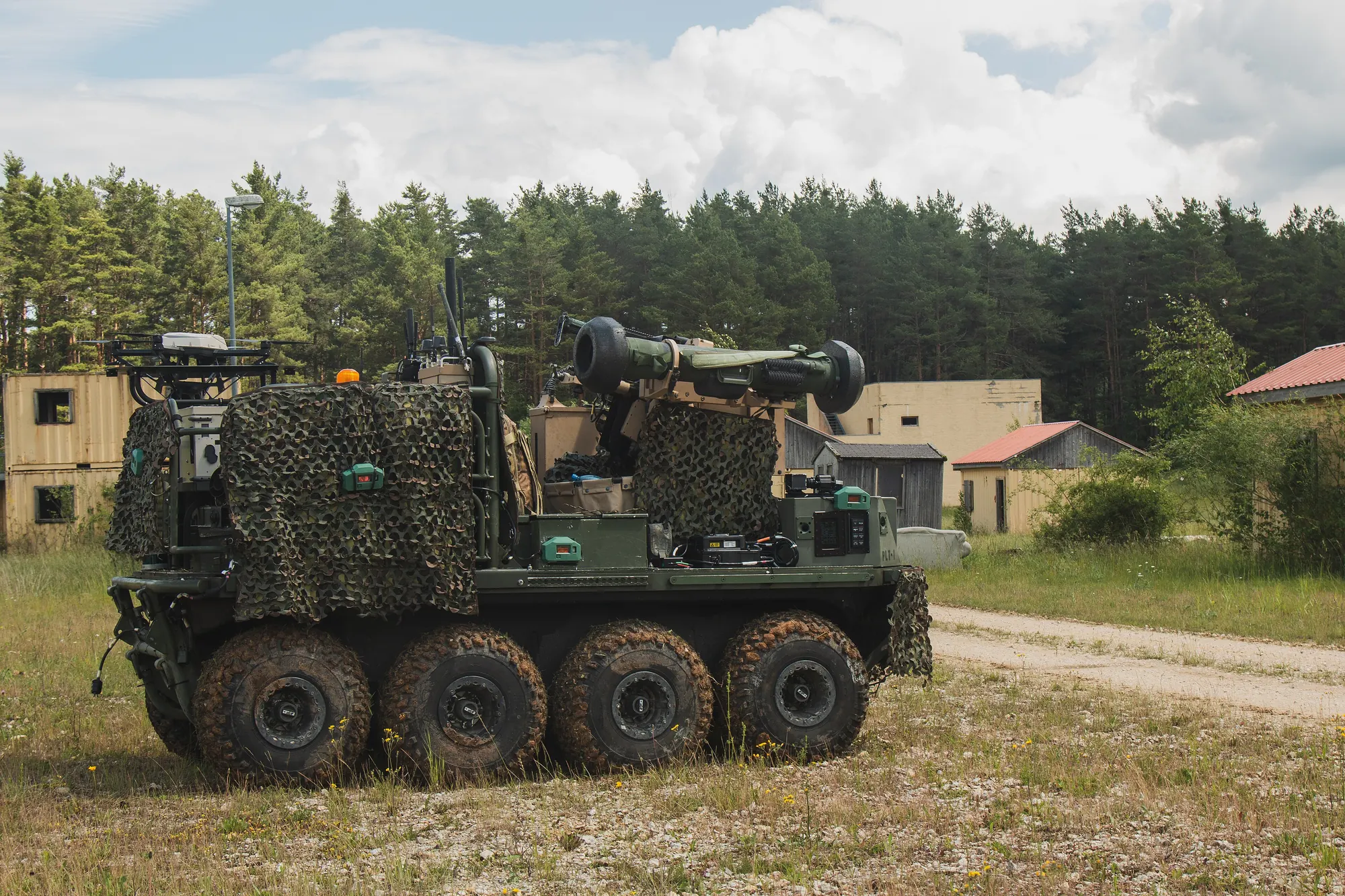
Project Origin robotic combat vehicle at Hohenfels, Germany. Photo: U.S. Army photo by Spc. Christian Carrillo, Public domain (PD-USGov-Military-Army).
Funding history
| Date | Round | Amount |
|---|---|---|
| Jun 2026 | Seed | $25M |
Why it matters
Targets US and allied forces that must detect, access, map and secure underground facilities.
Is Traysar publicly traded?
Traysar is privately held as of November 14, 2026: there is no ticker and no announced IPO. Shares are not available on public exchanges.
Information only, not investment advice.
Some figures rest on a single report. Treat them as indicative.Last verified November 14, 2026
Traysar: key questions
What does Traysar do?
Develops autonomous subterranean robots for tunnel breaching, mapping and clearing, and rapid-burrowing platforms that create underground access points and deliver payloads.
Where is Traysar based?
Traysar is headquartered in Austin, Texas.
How much funding has Traysar raised?
Total funding is ~$25M, based on announced and reported rounds. Latest round: Seed, $25M, Jun 2026.
Who are Traysar's investors?
Notable investors include Silent Ventures, Lux Capital, Ora Global, Entree Capital, NeverLift VC, Impatient Ventures.
Is Traysar publicly traded?
Traysar is privately held as of November 14, 2026: there is no ticker and no announced IPO. Shares are not available on public exchanges.
Can you buy Traysar stock?
Not on a public exchange: Traysar is a private company. Shares of private companies change hands only in private transactions open to accredited investors, when the company allows it. This is not investment advice.
Sources
Figures come from company announcements, government sources and press reports. Spot an error? Send a correction. Nothing here is investment advice.
Similar companies
More ground robotics companiesCarnegie Robotics
Pittsburgh, PennsylvaniaCarnegie Mellon spinout building sensors and autonomy for military ground vehicles, including leader-follower logistics trucks and modular UGVs.
Common Vector Robotics
Detroit, MichiganBuilds rugged ground robots for military field use, including the high-speed Ghostrunner off-road platform and the 400 kg GL-1 autonomous payload base.
Forterra
Clarksburg, MarylandDevelops AutoDrive autonomy kits and the ROGUE uncrewed vehicle for military ground vehicles, evolved from Robotic Research founded in 2002.